
Dooly County Criminal Court Records
A criminal court record is the court case file, not just an arrest entry. In Dooly County, the Clerk of Superior Court keeps Superior Court criminal filings once the case is opened. GSCCCA lists Criminal as a Dooly clerk service, and the research names the clerk office as the custodian for Superior and Juvenile records. A criminal file can contain the charging document, bond order, arraignment entry, motions, orders, hearing notices, plea paperwork, trial entries, verdict, sentencing sheet, probation terms, and disposition data.
Georgia Superior Court is the trial court of general jurisdiction. The Georgia AOC guide states that Superior Court judges preside over felony trials, and Dooly County is in the Cordele Judicial Circuit. Magistrate Court can be tied to warrants or preliminary criminal matters, Probate Court can be tied to traffic citations, and Juvenile Court records are restricted. For a closer look at the charging side of the arrest-to-court path, use the Dooly County arrest records and court charges page.
Search Dooly County Criminal Court Records
The online route for Dooly Superior criminal case records starts at Georgia Courts e-access, which lists Dooly Superior under PeachCourt. PeachCourt advertises civil and criminal eFiling and court documents across Georgia, but the public access page does not expose specific Dooly search fields before account login. This means search instructions should focus on the confirmed access path: provider directory, account registration or login, and then provider tools after access.
- Confirm Dooly Superior's provider through Georgia Courts e-access.
- Open PeachCourt and register or sign in.
- Search the account system for the criminal case by the available provider fields.
- Read the docket for charges, motions, hearings, plea or trial events, disposition, and sentence.
- Request certified copies from the Dooly Clerk of Superior Court when the online record is not enough.
For Georgia criminal-history restriction rules, the GBI criminal-history restrictions page explains the statewide process under O.C.G.A. 35-3-37.
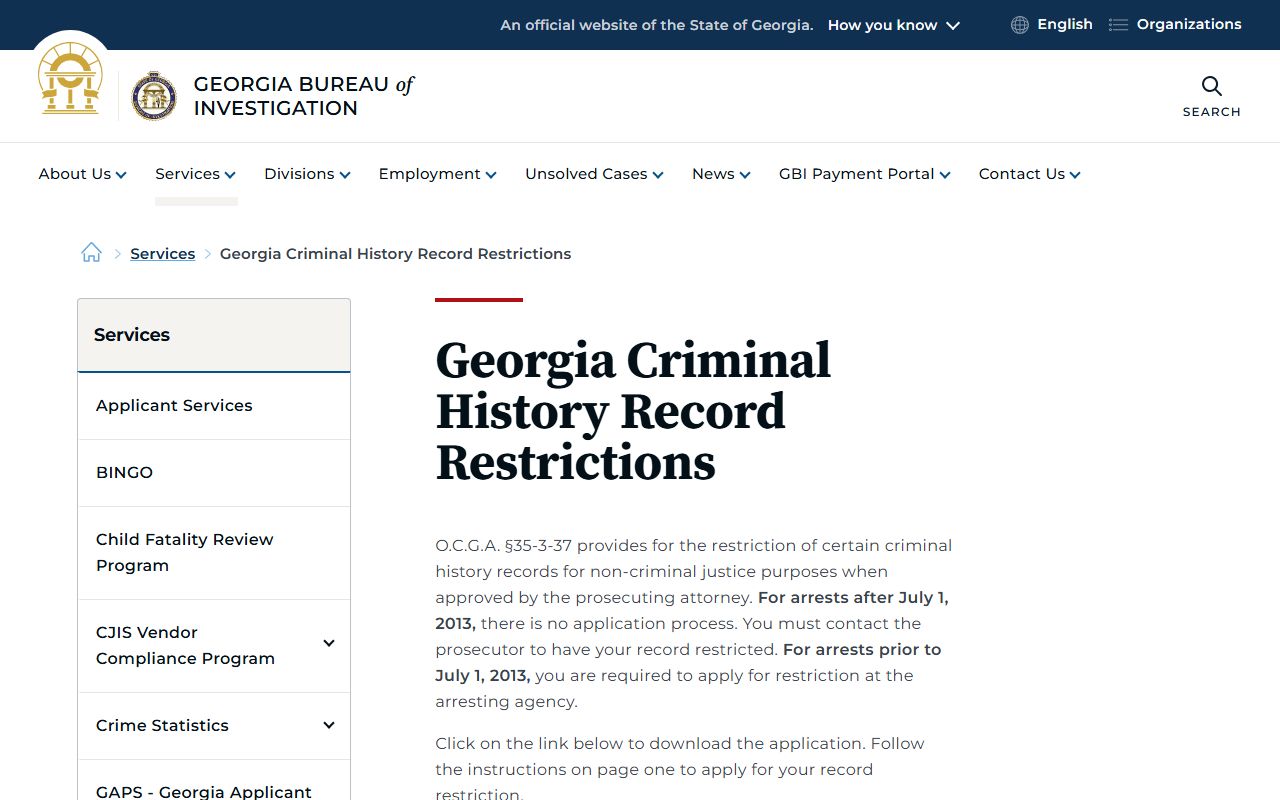
That statewide process affects criminal-history access, but it does not automatically erase every court docket entry in a Dooly Superior Court file.
Dooly County Criminal Case Stages
Criminal court records are easiest to read when the events are placed in order. The first court-filed charge may be an accusation, indictment, or other charging document. Arraignment is the hearing where charges are read and a plea is entered. Pretrial activity can include bond orders, motions, discovery disputes, continuances, mediation or accountability-court references, and notices. A case may end by plea, trial verdict, dismissal, nolle prosequi, or another disposition, and sentencing entries show punishment or probation terms when a conviction results.
Case flow: Charges Filed › Arraignment › Pretrial / Motions › Plea or Trial › Disposition › Sentencing
| Stage | What Happens |
|---|---|
| Charges filed | The prosecutor files an accusation or presents an indictment, creating the formal court charge record. |
| Arraignment | The defendant is called to answer the charges, and the plea is entered in the court record. |
| Pretrial / motions | Attorneys file requests, bond issues are addressed, hearings are scheduled, and orders are entered. |
| Plea or trial | The case resolves through a plea, trial verdict, dismissal, or prosecutor action such as nolle prosequi. |
| Sentencing | The court records jail, prison, probation, fines, costs, restitution, or other sentence terms when applicable. |
Dooly County Criminal Record Fields
The research did not include an inspected public sample Dooly criminal case screen because PeachCourt requires account access. These fields are therefore expected court-record fields drawn from the Dooly research inventory and general court-record structure, not a promise that each field appears in every online view. Some items may be available only by clerk request, redacted from public access, or missing from an older digitized entry.
| Field | What It Shows |
|---|---|
| Case number | The identifier assigned by the clerk or provider system. |
| Defendant | The person charged in the criminal case, with party role details when shown. |
| Charges | The offense text, charge count, accusation or indictment detail, and amended or dismissed status when recorded. |
| Docket entries | Arraignment, bond, motion, order, hearing, continuance, trial, plea, and sentencing events. |
| Disposition | The outcome of the case or charge, such as guilty plea, verdict, dismissal, or nolle prosequi. |
| Sentence | Probation, confinement, fines, costs, restitution, special conditions, or other punishment terms when public. |
Charges vs. Convictions
A charge is not a conviction. A Dooly County criminal court record can show a filed charge that was later amended, reduced, dismissed, or not pursued. A conviction appears only after a guilty plea, guilty verdict, or other conviction-producing outcome. This distinction is important when reading docket entries because the presence of a charge does not prove that the person was found guilty.
| Charge | Conviction | |
|---|---|---|
| Stage | Accusation, indictment, citation, or other filed allegation | Verdict, plea, or judgment that resolves guilt |
| Record meaning | Shows what was alleged or filed | Shows the court outcome on guilt |
| Can change | May be amended, reduced, dismissed, or nolle prossed | May later be appealed, restricted, or affected by court order |
Read Dispositions and Sentences
Disposition means the outcome of a case or charge. Common criminal-court outcomes include guilty, not guilty, dismissed, nolle prosequi, plea, verdict, probation, and sentence entries. Nolle prosequi means the prosecutor has decided not to pursue a charge. A sentence can include jail, prison, probation, fines, costs, restitution, special conditions, or a combination of terms. Cordele Circuit Drug Court may also affect docket entries for eligible cases because the circuit program serves Dooly, Crisp, Ben Hill, and Wilcox counties.
The O.C.G.A. 35-3-37 statute is the core Georgia criminal-history restriction law cited in the research.
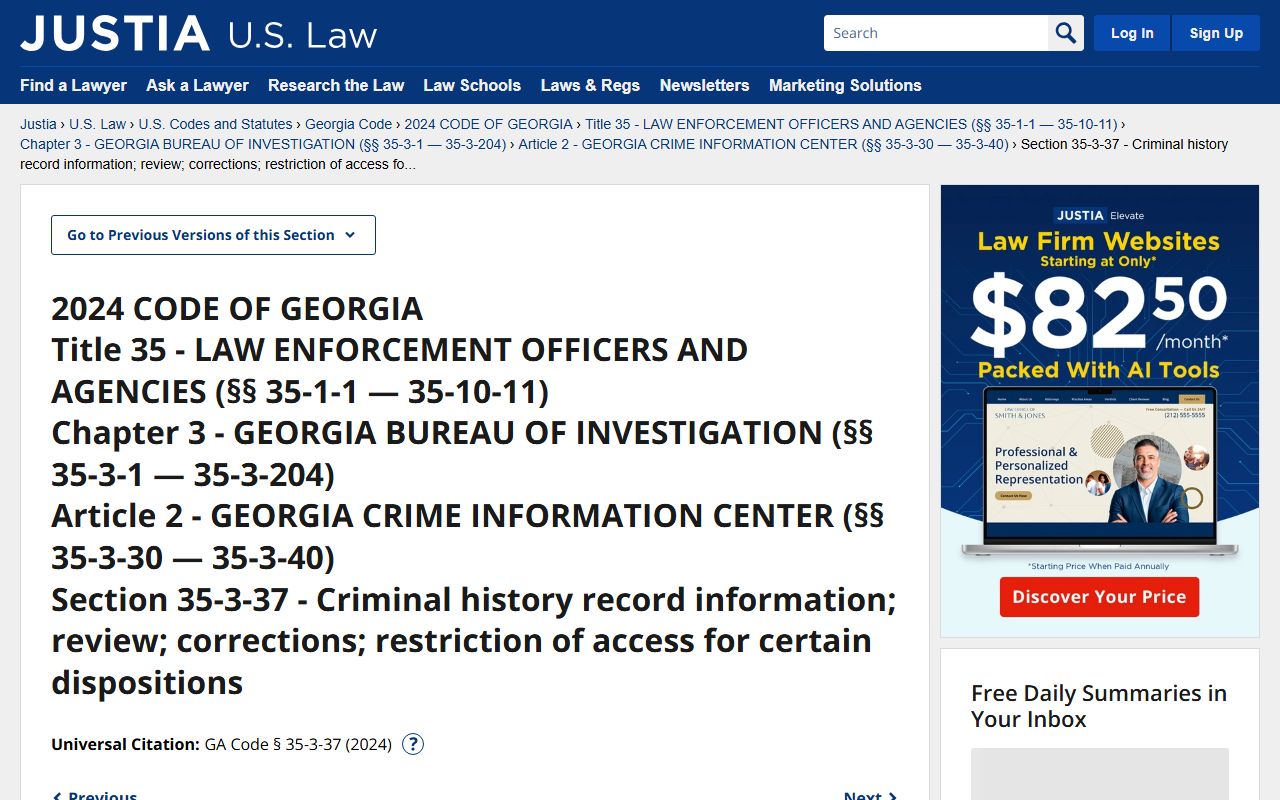
The restriction statute helps explain why a criminal-history lookup and a court-file search can return different public results.
Sealed vs. Restricted Records
Georgia research for Dooly uses record restriction as the key term for qualifying criminal-history records. A restricted criminal-history record may be hidden from non-criminal justice purposes, but it can remain available to criminal-justice agencies. A sealed court file is different because it limits public access to the court record itself. A person who needs a Dooly Superior Court case hidden from public court access may need a court order or a separate court-file process beyond the GCIC criminal-history restriction route.
| Restricted Criminal History | Sealed Court File | |
|---|---|---|
| Source | Georgia criminal-history system and O.C.G.A. 35-3-37 | Court order, statute, or court-rule process |
| Public effect | Limits non-criminal justice access to qualifying history data | Limits public access to the court file or parts of it |
| Dooly contact | Prosecutor for post-July 1, 2013 arrests or arresting agency for older arrests | Clerk and court tied to the case file |
Note: Juvenile criminal matters are restricted by separate Georgia juvenile statutes and are not ordinary adult criminal court records.
Access to Dooly Criminal Records
Public access to Dooly criminal court records is shaped by court custody, open-record rules, and criminal-history limits. Adult Superior Court files are generally requested through PeachCourt or the Clerk of Superior Court. Jail, booking, arrest, incident, warrant, and civil-process records are sheriff records, not clerk case files. Pending investigation or prosecution materials may be withheld under Georgia exemptions, although initial arrest and incident reports have their own access rules. Juvenile, sealed, restricted, and personal-identifier material may be unavailable or redacted.
The U.S. Attorney's Office for the Middle District of Georgia is relevant only for federal prosecutions involving Dooly County, not state Superior Court prosecutions.
Federal criminal cases follow federal docket systems and prosecutors, while Dooly state felony files remain tied to Superior Court and the Cordele Judicial Circuit.
Dooly County Prosecutor Records
The Cordele Judicial Circuit District Attorney handles Superior Court prosecution for Dooly County. The official prosecutor listings identify Brad Rigby as District Attorney and provide the Cordele office contact. Prosecutors file accusations, present indictments, negotiate pleas, decide dismissals or nolle prosequi, appear in probation revocation matters, and handle restriction approvals for qualifying post-July 1, 2013 arrests. Prosecutor records are not a substitute for the court file, but prosecutor action explains many criminal docket entries.
The Prosecuting Attorneys' Council of Georgia listing documents the Cordele Judicial Circuit prosecutor contact used for Dooly criminal case context.

The prosecutor listing helps connect Dooly criminal court records to the office that files or resolves many Superior Court charges.